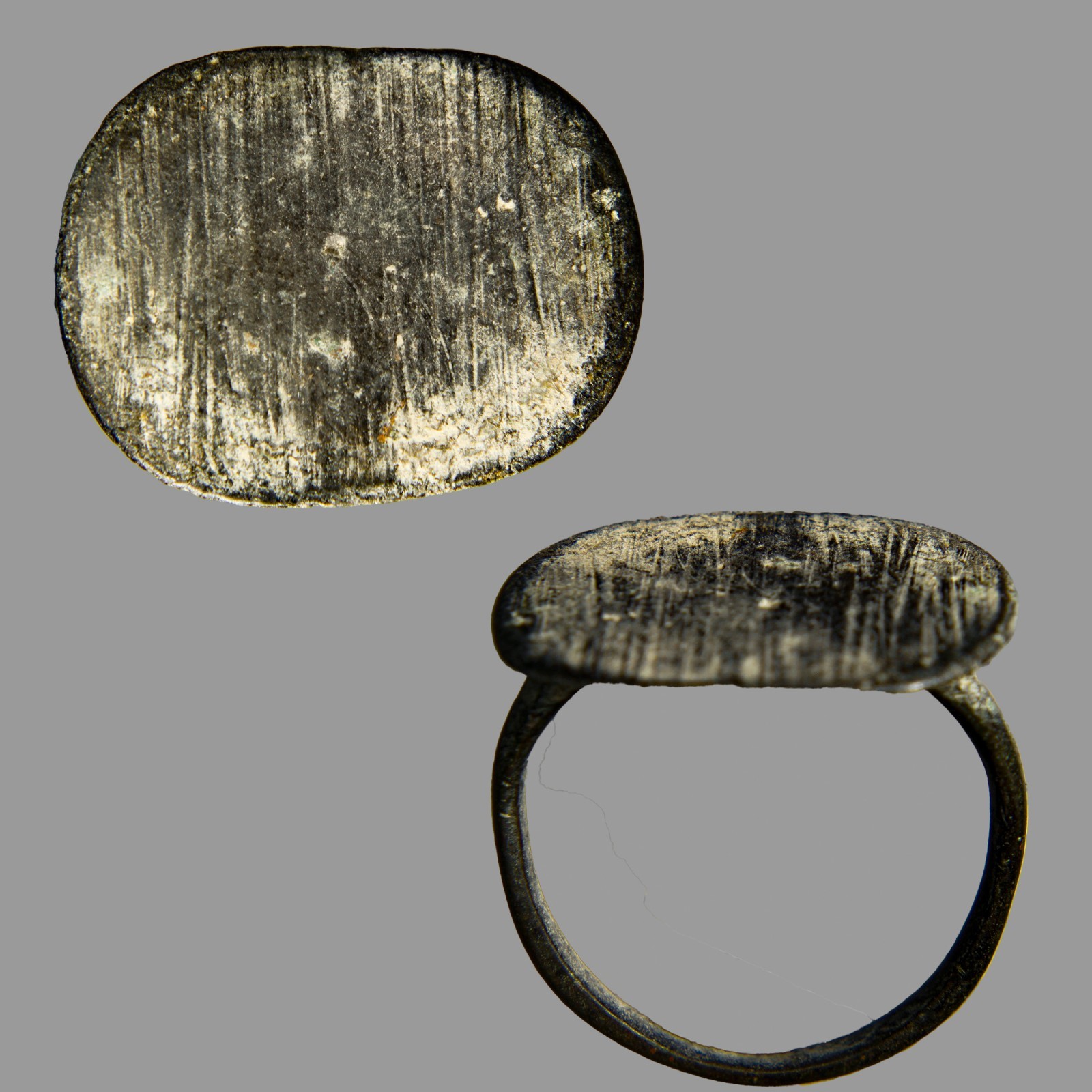
Ancient Roman Imperial Legionary Bronze Signet Ring (US Size 9 — c. 1st–3rd Century AD)
Authenticity & Guarantee
Item Specifications & Exact Dimensions
Object: Cast Bronze Military Signet Ring with Broad Flat Oval Bezel Matrix
Culture / Period: Roman Imperial Military / Provincial Garrison Sphere
Date Range: Circa 1st Century AD – 3rd Century AD (c. 100–300 AD)
Ring Size: US Size 9 (approx. 19.0 mm internal diameter)
Material: Cast Bronze (Copper Alloy)
Form & Architecture: Prominent flat oval bezel plate mounted atop a slender circular hoop; engineered as a legionary\'s personal signet matrix or field identification ring
Condition: Exceptional, complete ancient condition. Intact structural geometry, complete original hoop and bezel plate, displaying a rich dark charcoal to olive-green bronze patina with light sandy-white earthen burial deposits. Free of modern restoration or tooling.
HISTORICAL CONTEXT & TYPOLOGICAL LORERoman Legionary Signet Rings & Military Administration
In the Roman Imperial army, personal signet rings (annuli) were essential pieces of military gear for legionaries, officers, and auxiliary soldiers stationed in field camps (castra) across the frontier limes. Soldiers used bronze signet rings to press personal ownership marks or seals into soft wax, clay, or lead tags, securing their personal property, pay pouches, wooden writing tablets (tabulae), and official correspondence sent home or between garrisons.
Garrison Engineering & Field Usability
Flat oval bezels provided a sturdy, broad sealing surface while maintaining a lightweight profile that would not snag on mail armor (lorica hamata) or leather equipment straps. Cast in durable copper alloy, these rings were resilient enough to withstand the daily rigors of campaign life and march duty across the empire\'s frontiers.
Typological Analysis & Exact Classification
Comparable Archaeological Examples & Museum Accession Numbers
Louvre Museum (Inv. No. OA 3982): Crusader Kingdom of Jerusalem silver ring set with carnelian cabochon.