When you click on links to various merchants on this site and make a purchase, this can result in this site earning a commission. Affiliate programs and affiliations include, but are not limited to, the eBay Partner Network.
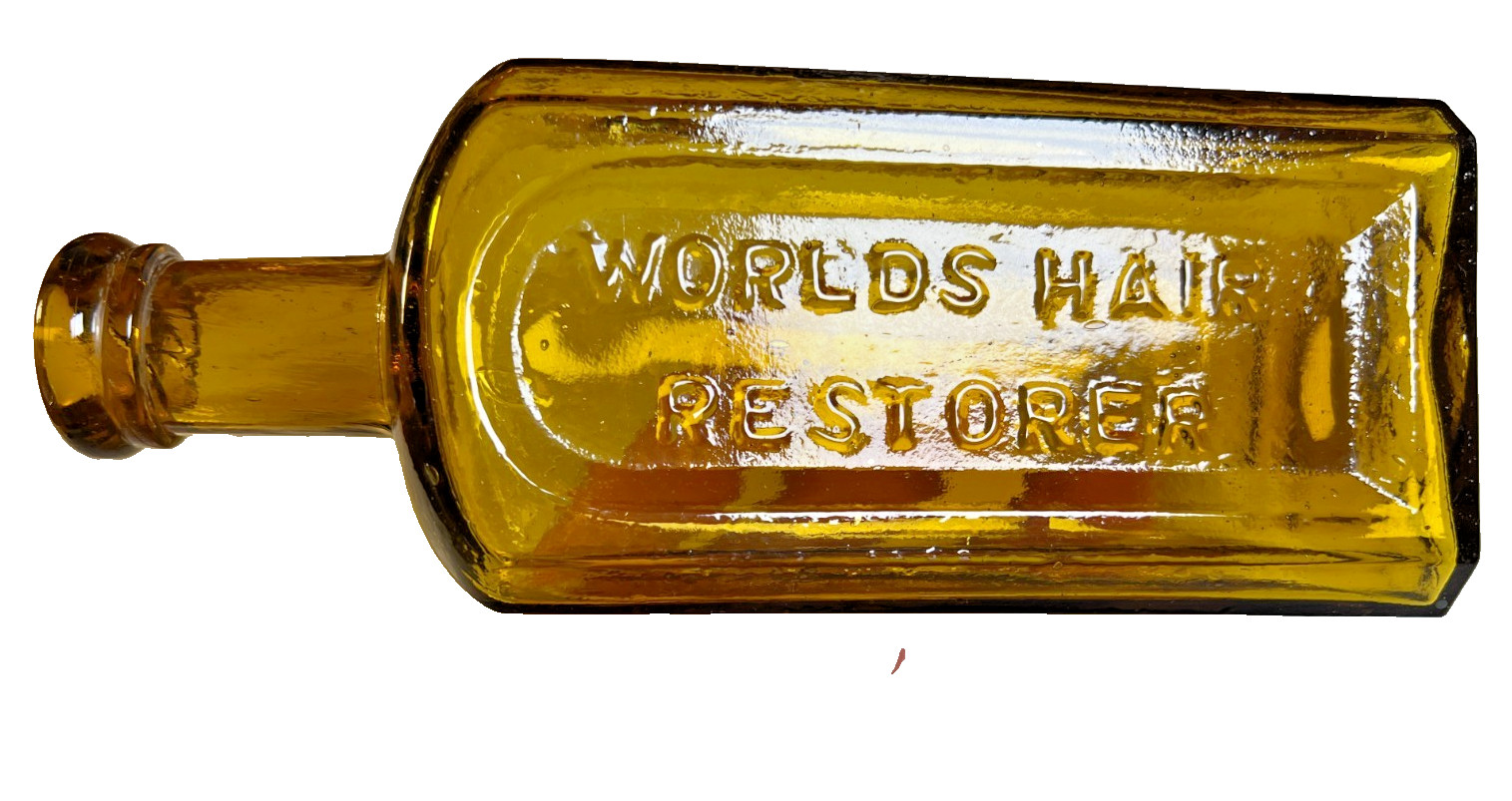
ANTIQUE MRS S A ALLEN’S WORLD HAIR RESTORER NEW YORK YELLOW AMBER BOTTLE c1870 APPLIED LIP
Intro / Description:
Step right into post–Civil War America—when “miracle” hair tonics promised to restore not just your hairline, but your confidence, your social standing… and possibly your chances at a respectable parlor introduction. This striking screaming yellow-amber example of Mrs. S. A. Allen’s World Hair Restorer absolutely glows with that unmistakable 19th-century presence.
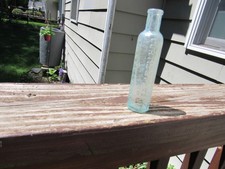
Standing a full 7 inches tall, this rectangular medicine bottle features bold embossing:
“MRS S A ALLENS WORLD HAIR RESTORER NEW YORK”
The glass is alive with character—rich yellow amber color with subtle depth, heavy orange peel texturing, and classic early production quirks. The gloppy applied lip and smooth base with hinge mold influence firmly place it in the circa 1868–1875 range, right at the transition from true pontil-era production into more standardized mold work.
Condition is about as good as it gets:
- No chips, cracks, or dings
- Bright, clean, and shiny “attic mint” surface
- Just a tiny open bubble on the reverse noted for accuracy
This is one of those bottles that doesn’t just sit on a shelf—it radiates.
Maker / Company:
Mrs. S. A. Allen’s World Hair Restorer was produced by the widely known firm tied to Mrs. S. A. Allen, operating out of New York, New York. The brand became one of the most recognizable hair preparations of the 19th century.
The company capitalized on the booming patent medicine industry, where branding and bold claims often mattered more than chemistry.
Contents & Use:
Marketed as a cure-all for:
- Hair loss
- Premature graying
- Scalp conditions
Like many restorers of the time, it likely contained a mix of:
- Alcohol
- Sulfur compounds
- Herbal extracts
Some formulas even included ingredients that would slightly stain hair darker—giving the illusion of “restoration.” Not exactly science… but effective marketing.
Marketing & Cultural Context:
This product was heavily advertised in newspapers and pamphlets, often targeting anxieties about aging and appearance—especially among women, though men were certainly not immune (Victorian vanity was alive and well).
The phrase “World Hair Restorer” wasn’t subtle. In the 1800s, if your product name didn’t sound like it could fix everything short of a broken wagon axle, you weren’t trying hard enough.
Life in America (circa 1870):
This bottle comes from a fascinating moment in U.S. history:
- Technology: Railroads were rapidly expanding, and telegraph lines connected cities like never before
- Medicine: The patent medicine boom was in full swing—largely unregulated and wildly creative
- Politics: The nation was deep into Reconstruction following the Civil War
- Daily Life: Urban centers like New York were growing fast, fueled by immigration and industry
New York City in the 1870s:
During this decade, New York City was transforming into a true global metropolis:
- Construction of the Brooklyn Bridge began in 1870
- Political power struggles under William M. Tweed (Tammany Hall era) dominated headlines
- Massive waves of immigrants were reshaping neighborhoods and commerce
Products like this thrived in that environment—fast-moving, competitive, and fueled by mass advertising.
Authenticity Note – Why This Example Is 100% Period Correct
Collectors can buy this one with confidence—this is not a reproduction, not altered, and not enhanced. In fact, bottles in this exact bright yellow-amber color are among the least likely to ever be faked.
Here’s why:
First, the color itself. This vivid, clean yellow amber is a natural batch variation from 19th-century glassmaking, not something modern reproducers replicate. Known alterations like irradiation turn glass purple—not yellow—and artificial staining produces uneven, muddy tones. This bottle shows consistent, evenly distributed color throughout, exactly what you expect from authentic period glass.
Second, the construction details line up perfectly with the circa 1868–1875 window:
- A true gloppy, applied lip—irregular, hand-finished, and unmistakably correct
- Hinge mold base—a transitional feature right where pontil-era methods were giving way to mold production
- Noticeable orange peel texturing and surface waviness
- Seed bubbles and a small open bubble—natural impurities from early glassmaking, not reproducible in modern copies
Third—and this is key—there is no known wave of reproductions of this bottle in amber. Reproducers historically focused on more common aqua examples, where volume and demand made it worthwhile. A niche color variant like this simply hasn’t been targeted.
Finally, the overall presentation:
That “attic mint” brightness, combined with honest, in-glass character (not damage), is exactly what seasoned collectors look for. Nothing here feels forced, artificial, or tampered with.
Bottom line:
If this were a reproduction, it would have to perfectly replicate 19th-century glass chemistry, hand-finishing techniques, mold transition traits, and natural aging—all for a bottle that trades in the low hundreds. That just doesn’t happen.
This is the real thing—an authentic survivor from the height of the American patent medicine era.