When you click on links to various merchants on this site and make a purchase, this can result in this site earning a commission. Affiliate programs and affiliations include, but are not limited to, the eBay Partner Network.
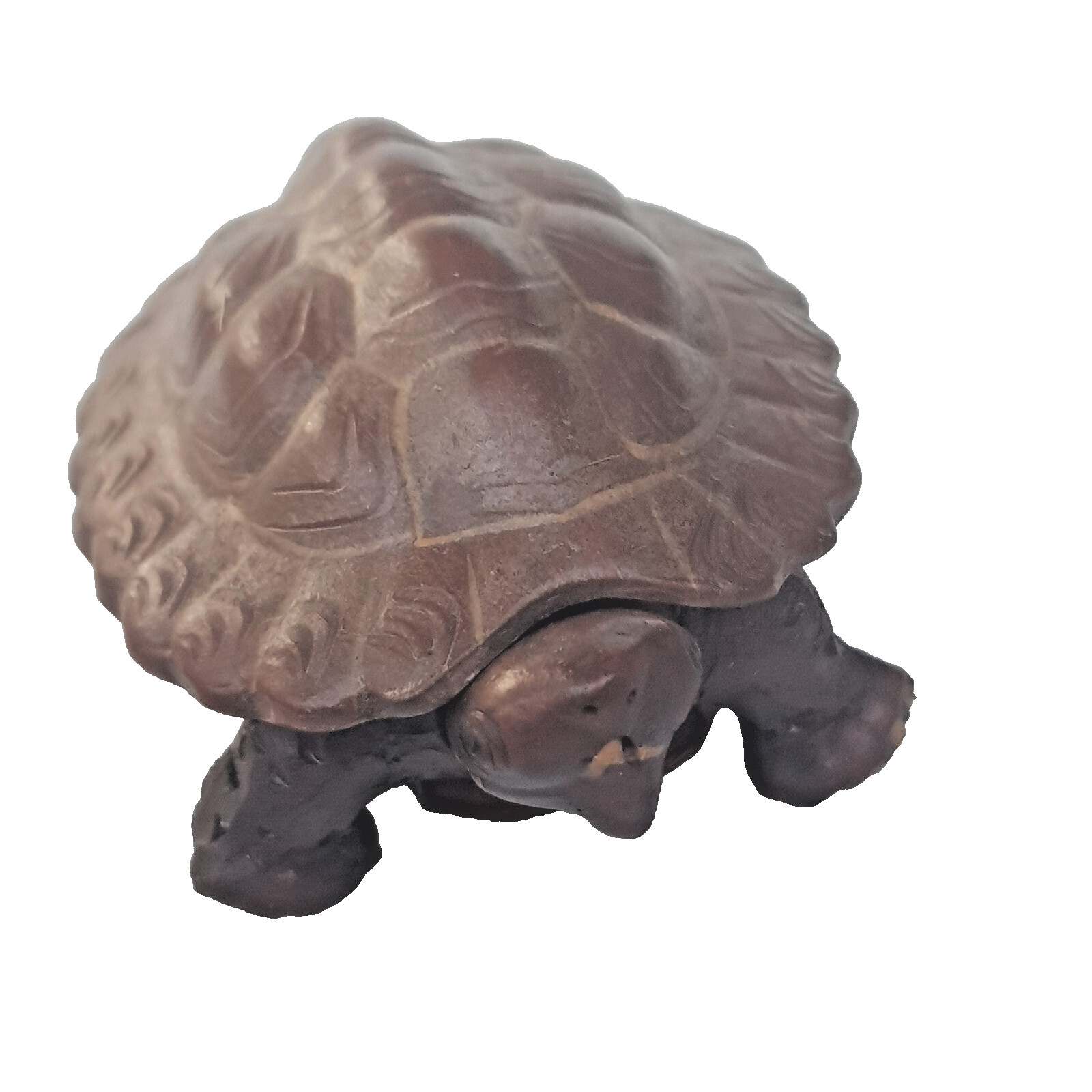
Stunning and amazingly made very skillfully. This is a movable head on turtle which is contained inside the shell. This is from Bizen and carries the mark on the belly of the turtoise.
In Japan, turtles and tortoises are revered for their symbolic meanings.The tortoise is often associated with longevity, wisdom, and resilience, embodying themes of stability and protection in Japanese culture.
In Shinto mythology, the turtle is a significant figure, often depicted as a bridge between the earthly realm and the divine, symbolizing balance and harmony.
The turtle is also linked to the god of the sea, Ryujin, and is believed to possess magical powers, making it a symbol of good luck and longevity.
The word for turtle in Japanese is "kame" (亀), which is used to describe both turtles and tortoises, reflecting their cultural significance. Overall, turtles and tortoises hold deep cultural importance in Japan, representing hope, protection, and the pursuit of a long and prosperous life.
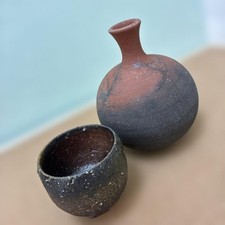
Bizen ware was traditionally produced in and around the village of Imbe in Bizen province, from where it received its name. It is therefore also known as Imbe or Inbe ware. It has ties to Sue pottery from the Heian period in the 6th century, and made its appearance during the Kamakura period of the 14th century.
Bizen was considered one of the Six Ancient Kilns by the scholar Koyama Fujio. It experienced its peak during the Momoyama period of the 16th century. During the Edo period, the Ikeda lords of the Okayama domain continued to support the kilns and gave special privileges to families who operated them, such as the Kimura, Mori, Kaneshige, Oae, Tongu, and Terami. The rustic quality of Bizen made it popular for use in Japanese tea ceremony. Ware of the early phase is called old Bizen style (古備前派 Ko-Bizen-ha).
A climbing noborigama kiln for producing Bizen ware After modernisation began during the Meiji era of the 19th century, Bizen almost disappeared along with many other traditional crafts. The artist Kaneshige Toyo (1896–1967) helped preserve it in the 1930s during the early Shōwa era by reviving the Momoyama style.[8][7] For his efforts he was named a Living National Treasure.
Bizen ware was designated a traditional Japanese craft by the government in 1982. At the beginning of the 21st century it was produced in around 300 operating kilns.
Artists honoured by the Okayama Prefectural government with the designation Intangible Cultural Property include Fujita Ryuho (1913–1973), Kaneshige Toyo, Fujiwara Kei (1899–1983), Fujiwara Ken (1924–1977), Fujiwara Rakuzan (1910–1996), Mimura Tokei (1885–1956), Isezaki Yozan (1902–1961), Ishii Furo (1899–1964), Oae Jindo (1890–1954), Kaneshige Michiaki (1934–1995), Kaneshige Sozan (1909–1995), and Yamamoto Toshu (1906–1994). Kaneshige Toyo, Fujiwara Kei and Yamamoto Toshu were in addition registered as Living National Treasures.
Other notable artists include Konishi Toko I (1899–1954), Matsuda Kazan I (1902–1948), Nishimura Shunko (1886–1953), and Suzuki Osai (1908–1972).Contemporary artists include Hajime Kimura and Kosuke Kanishige, who specializes in the hidasuki technique, as well as Harada Shuroku, Mori Togaku, Abe Anjin,[8] Nakamura Rokuro,[11] and Kakurezaki Ryuichi.